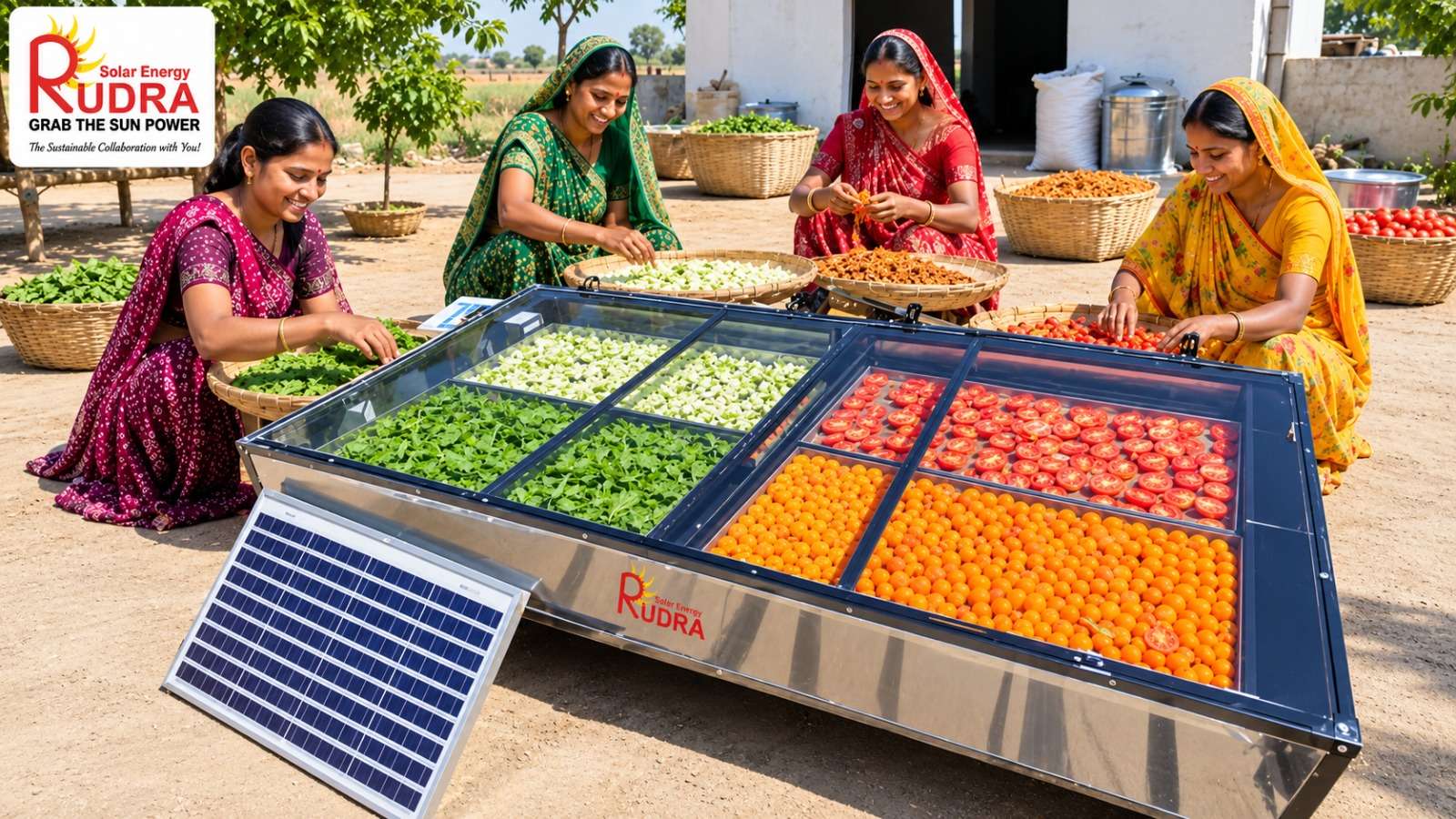
Ahmedabad, Gujarat, India | November 2026 - A small change in technology can create a meaningful difference in people's lives. Across India, women and small-scale entrepreneurs are finding new opportunities to process agricultural produce, develop food products and build additional sources of income with the support of Rudra Solar Energy's solar drying technology.
For many people, food processing begins with a simple idea: making better use of available fruits, vegetables and agricultural produce. But traditional open-sun drying, unpredictable weather, hygiene concerns and the cost of conventional drying methods can make turning that idea into a practical activity challenging.
Rudra Solar Energy, an Ahmedabad-based manufacturer of solar drying solutions established in 2006, is helping address these challenges by providing practical solar dryers designed for different food-processing requirements.
Through its solar drying solutions, the company is supporting individuals who want to move beyond traditional drying practices, explore value-added food processing and take steps towards greater financial independence and self-reliance.
Solar Drying Technology Creating New Opportunities for Women
One of the most meaningful aspects of solar drying technology is its ability to support different needs, whether someone wants to establish a home-based food business, improve household food preparation or generate additional income.
The experience of Maya Tiwari from Delhi reflects how the right equipment can help turn food-processing ambitions into a business opportunity. Working with products such as Aam Papad, Amla and fruit bars, Maya previously faced challenges with uneven drying, high energy expenses and dependence on weather conditions. After adopting a Rudra Solar Dryer, she started processing approximately 15–20 kg of products per month and recorded sales worth ₹15,000 in her first month.
Her experience shows how an improved drying arrangement can help small food entrepreneurs take their first steps towards organised, value-added production.
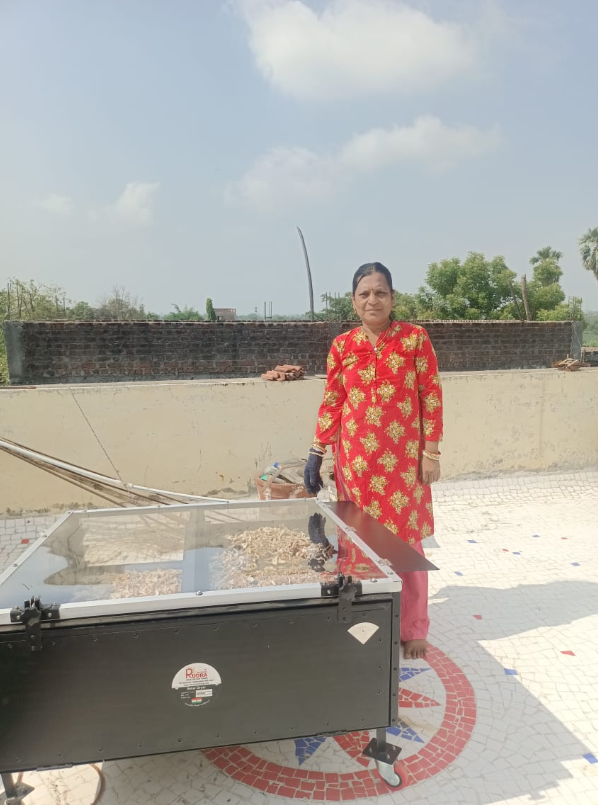
A similar transformation in food-processing practices can be seen in the journey of Smitaben Vasava from Bharuch district, Gujarat. After retiring from government service, she wanted to remain active, contribute to her household and develop an independent activity from home. However, she needed suitable equipment to process seasonal agricultural produce.
With a Rudra Solar Dryer, Smitaben began preparing products such as Aam Papad, Aamchur powder and dried vegetables. Her activity gradually developed into a source of additional income. According to her case study, she now produces approximately 2–3 kg of dried products daily and earns around ₹6,000–₹8,000 per month.
For Smitaben, solar drying technology has provided an opportunity to begin a new chapter after retirement, demonstrating how women can explore income-generating activities without necessarily setting up a large processing facility.
Bringing Better Food Processing Within Reach of Households
The impact of solar drying is not limited to commercial production. It can also support families who want greater control over the way their food is prepared and preserved.
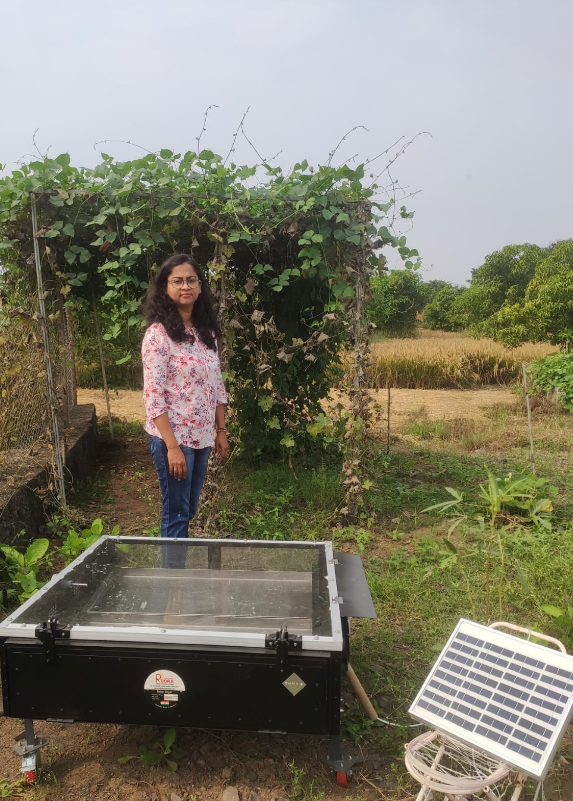
Ashwini Satish Patil from Raigad district, Maharashtra, adopted the Rudra Solar Dryer with a different objective. Concerned about the quality and hygiene of dried food products available in the market, she wanted to prepare her own dried ingredients at home.
Using the dryer, she processes mango pulp, leafy greens, fruits and spices for household consumption. The enclosed drying system gives her greater control over the drying environment compared with traditional open-sun drying, where dust, insects and changing weather can affect the process.
Her experience represents another dimension of the opportunities created by solar drying technology. For Ashwini, the value lies in household self-reliance, food preparation and the ability to process seasonal produce according to her family's requirements.
Supporting Agricultural Entrepreneurs Beyond Traditional Drying
The opportunities created by Rudra Solar Dryers also extend to agricultural entrepreneurs who want to improve their existing food-processing activities.
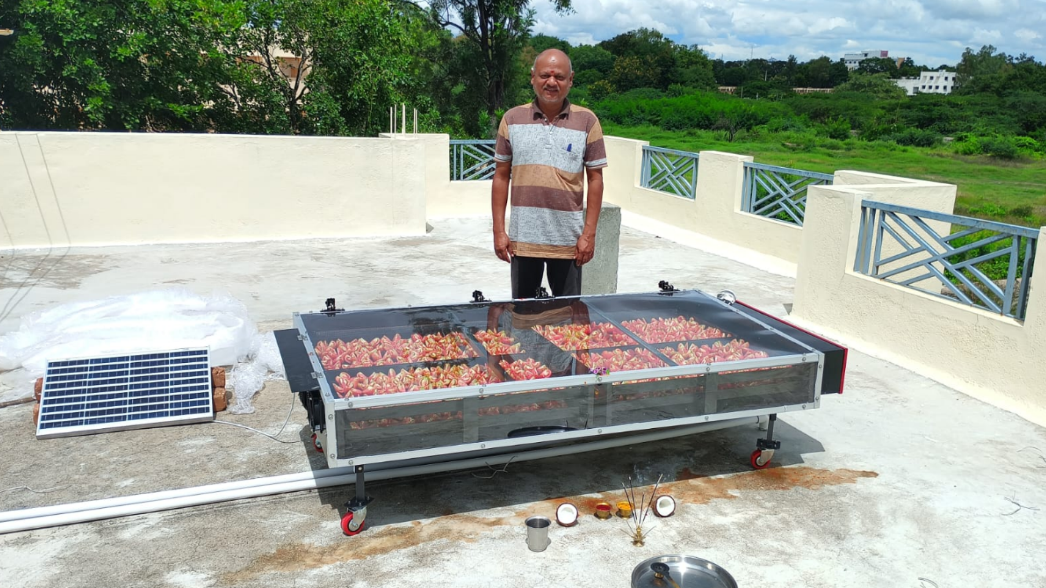
In Madanapalle, Andhra Pradesh, former teacher Ravi Aluganti was exploring agricultural work to supplement his family's income. His initial approach involved drying tomatoes in open sunlight, but dust, insects, sudden rainfall and uneven drying made the process difficult.
After adopting a Rudra Solar Dryer with hybrid solar and electric backup, he found a more controlled alternative to traditional open-sun drying. His case study reports that tomato drying, which previously took around 5–6 days, could be completed in approximately 2–3 days during sunny conditions.
Ravi now sells dried tomatoes at around ₹500 per kg and reports earning more than ₹2,000 per month through this part-time activity.
His journey further demonstrates how solar drying equipment can help people make productive use of agricultural produce while exploring additional income opportunities.
Rudra Solar Energy: Technology That Supports Progress
These experiences reflect a broader opportunity within India's agricultural and food-processing sector. Fruits, vegetables, spices and other seasonal produce can be converted into value-added products through suitable drying and processing methods.
Rudra Solar Energy develops solar dryers for different capacities and applications, supporting farmers, women entrepreneurs, self-help groups, food-processing businesses and small-scale manufacturers.
Depending on the selected model, its solar dryers offer features such as enclosed drying chambers, multiple drying trays, solar-powered ventilation and optional electric backup. These configurations help users select equipment according to their processing requirements.
By offering alternatives to conventional open-sun drying, Rudra Solar Energy is helping users explore more controlled, practical and energy-conscious food-processing methods.
The experiences of Maya, Smitaben and Ashwini particularly highlight how access to appropriate technology can support women's participation in food processing, household self-reliance and independent income-generating activities. Together with Ravi's agricultural enterprise, they illustrate the wider potential of solar drying technology across different communities and applications.
A Bigger Step Towards Women's Empowerment and Self-Reliance
Women's empowerment is not only about providing opportunities; it is also about making practical resources and technology accessible so women can turn their ideas into meaningful activities.
For a woman starting a home-based food business, a retired professional looking for a new source of income or a household seeking greater control over food preparation, the right solar drying solution can make a meaningful difference.
Through its solar dryers, Rudra Solar Energy is contributing to this journey by helping individuals explore food processing, make better use of agricultural produce and develop new possibilities for their livelihoods.
As more people look towards value-added agricultural products and sustainable food-processing methods, solar drying technology has an important role to play in supporting small enterprises and rural entrepreneurship.
Rudra Solar Energy believes that technology should create opportunities, strengthen livelihoods and empower people to move forward. Because the real value of a solar dryer is not limited to the food it dries, but also lies in the new opportunities it can help create.
About Rudra Solar Energy
Rudra Solar Energy is an Ahmedabad-based manufacturer of solar dryers and solar thermal products, established in 2006. The company focuses on developing practical solar solutions for agricultural processing, food preservation and value addition. Its product range includes solar dryers, solar cookers, solar ovens and other solar-based applications.
Website: https://www.rudrasolar.in
Website: https://www.rudrasolarenergy.com
Email: sales@rudrasolarenergy.com
Location: Ahmedabad, Gujarat, India