India,4th June 2026:-India’s real estate market is no longer being shaped only by where people want to live today. It is increasingly being shaped by where cities are going tomorrow.
A recent infrastructure outlook highlights a powerful shift across global markets: organisations that identify infrastructure trends early, respond with speed, and embed sustainability into their long-term plans are better positioned for leadership. For Indian real estate, this message could not be more relevant. Across high-growth housing markets, developers who anticipated the rise of infrastructure-led corridors are now seeing the benefits of early conviction.
In the past, real estate growth was often driven by established neighbourhoods, central city locations and immediate social convenience. Today, the strongest residential markets are emerging along future-ready corridors supported by expressways, metro lines, airport connectivity, IT hubs, financial districts, commercial development and civic infrastructure. Buyers are no longer looking only at the present address; they are evaluating the future potential of the location.
This is visible across India’s leading housing markets. Bengaluru, Mumbai and Pune together accounted for a major share of housing sales across the top seven cities in 2025. Bengaluru, Hyderabad, Chennai and Pune continued to remain important tech-led residential markets, supported by employment hubs, infrastructure expansion and lifestyle-led demand. Even when overall residential sales moderated, premium housing continued to show strength, proving that buyers are willing to invest in better-planned homes, stronger brands and locations with long-term promise.
The numbers reflect this shift clearly. In 2025, India’s top seven residential markets recorded over 270,000 housing sales. While overall sales volumes saw moderation, homes priced above
₹1 crore captured nearly 63% of annual sales, compared to 53% in 2024. Premium housing sales above ₹1 crore grew even as the mass segment lost share. This indicates that the Indian homebuyer is not simply buying square footage anymore. They are buying credibility, liveability, design quality, location strength and future value.
Infrastructure is at the heart of this change. A home located near expanding employment corridors, metro networks, airports, business districts and social infrastructure becomes more than a residence. It becomes a long-term asset. Developers who identify such growth corridors before they become obvious to the market gain the advantage of foresight. They can create communities where infrastructure, lifestyle and investment value move together.
Globally, infrastructure itself is entering a massive investment cycle. PwC’s Global Infrastructure Outlook estimates that the world will require over US$151 trillion in infrastructure investment by 2050, with Asia-Pacific accounting for more than half of this opportunity. The report also points to the increasing importance of digital infrastructure, clean energy, resilient transport and connected urban systems. For India, where urbanisation continues to accelerate, this has direct implications for real estate. The cities that invest better will grow better. The developers who understand that growth early will lead to better.
However, infrastructure alone is no longer enough. The next phase of real estate leadership will also be judged by sustainability.
Sustainability has moved from being a compliance statement to becoming a business advantage. Buyers are becoming more aware of energy efficiency, water conservation, open spaces, natural ventilation, heat reduction, green building practices and long-term maintenance. A sustainable community is no longer seen only as environmentally responsible; it is increasingly seen as healthier, smarter and more future-proof.
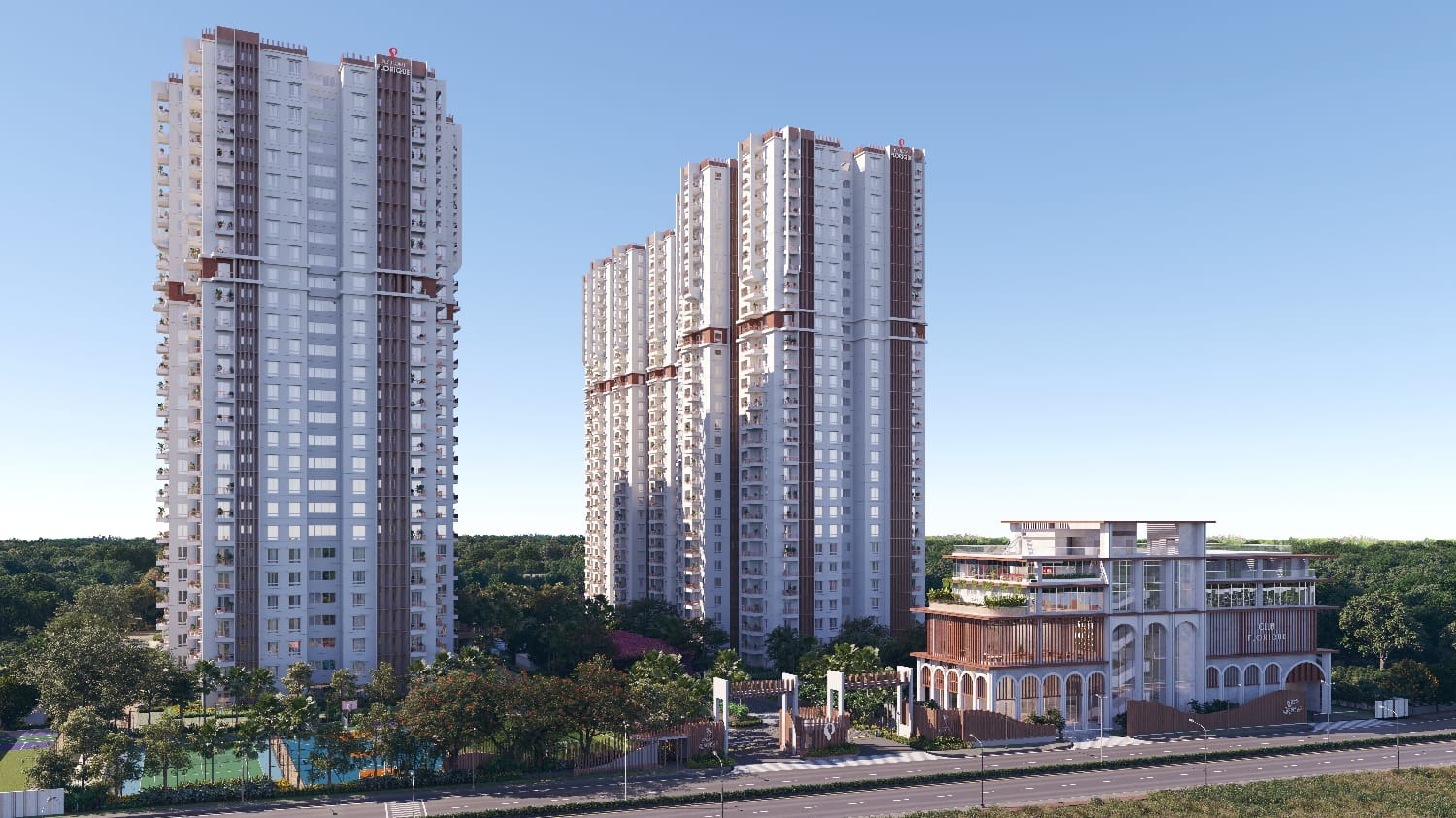
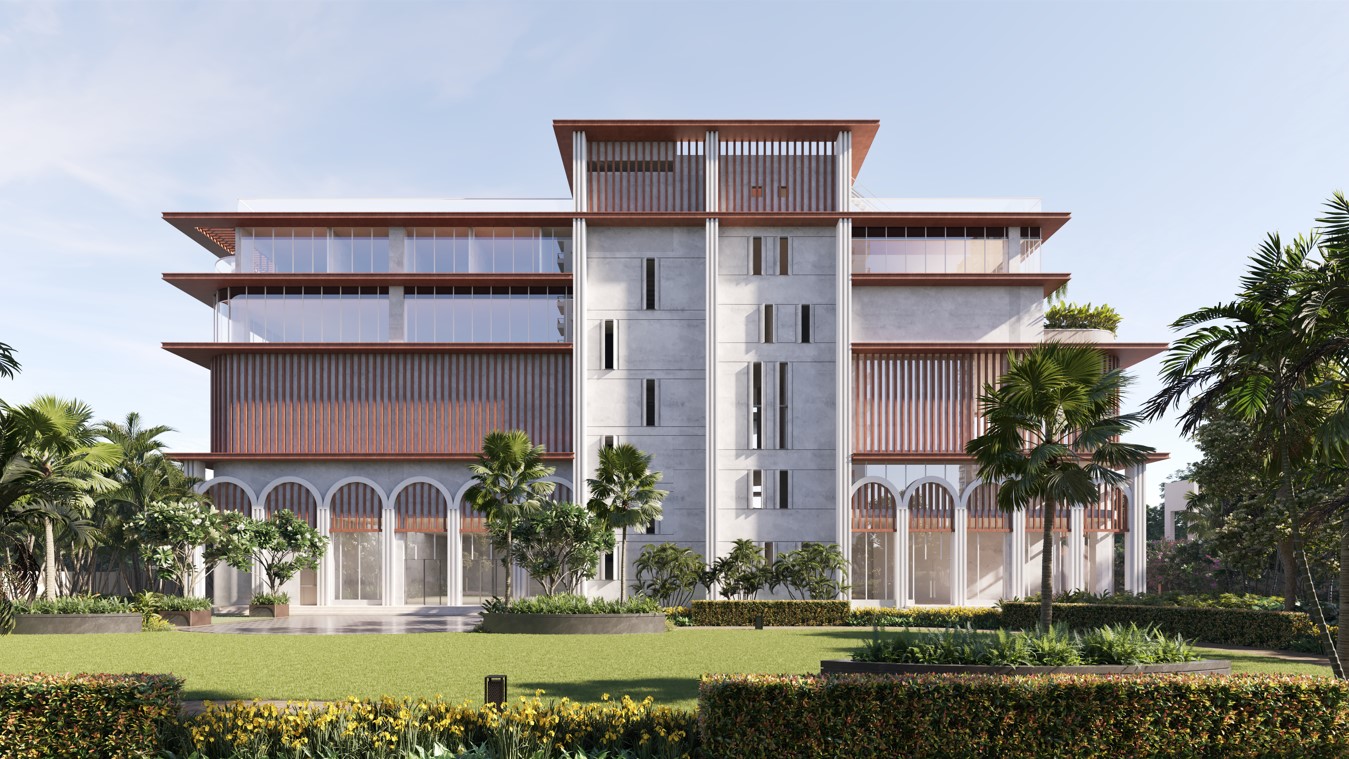
This is why sustainability must be designed into the project from the beginning, not added at the end. The orientation of towers, the movement of wind and light, the proportion of open spaces, the efficiency of water systems, the selection of materials, the quality of landscaping and the way amenities are integrated all shape the everyday experience of residents. True sustainability is not only about saving resources. It is about creating a better rhythm of living.
At the same time, wellness is becoming one of the strongest forces shaping modern homes. The meaning of luxury has evolved. Earlier, luxury was defined by larger homes, premium finishes and exclusive amenities. Today, it is increasingly defined by calm, privacy, greenery, air, light, movement, community and emotional wellbeing.
This change is backed by global trends. The wellness real estate market reached hundreds of billions of dollars globally and is projected to grow strongly over the next few years. Wellness real estate is one of the fastest-growing segments within the global wellness economy, showing that people across markets are placing greater value on homes and communities that support better living.
For modern families, wellness is not a luxury add-on. It is a daily need. Professionals need spaces that help them disconnect from work stress. Children need open areas to play and grow. Senior citizens need safety, accessibility and calm. Families need shared spaces where they can gather, celebrate and build community. Homebuyers are now asking deeper questions: Does this home give us peace? Does this community support our health? Does the environment feel open, safe and restorative?
This is why wellness-led planning must go beyond a clubhouse or a gym. It must be experienced across the entire community. Landscapes, walking trails, shaded pathways, gardens, natural light, ventilation, quiet zones, social spaces, senior-friendly areas, children’s zones and wellness amenities must all work together. A truly wellness-led development does not only provides facilities. It creates a way of life.
Global expert collaborations are also becoming central to this new real estate landscape. As buyers become more informed and expectations rise, developers are collaborating with international architects, landscape experts, structural consultants, sustainability advisors, interior designers and wellness specialists to create differentiated offerings. These collaborations bring global benchmarks in design, safety, engineering, sustainability and lifestyle planning.
But the real value of global collaboration lies in thoughtful localisation. Indian homes have unique cultural, climatic and family needs. Large families, multi-generational living, festivals, privacy expectations, Vastu preferences, climate sensitivity and community life all influence how people use their homes. The best developments are those that combine global expertise with Indian understanding.
This is where real differentiation happens. A project becomes more than a collection of apartments. It becomes a complete living environment. It reflects architecture, engineering, landscape, sustainability, wellness and emotional comfort coming together in one vision.
Speaking on this evolving direction, Prashanth Rao, Director, Poulomi Estates, said, “Real estate leadership today is about anticipating how cities will grow and how people will want to live in the future. At Poulomi Estates, we believe that infrastructure, sustainability and wellness must come together to create communities that offer long-term peace of mind. A home is not just a built space; it is an environment that should support better living, healthier routines and lasting value for generations.”
This perspective reflects the direction in which India’s premium housing market is moving. Buyers are increasingly choosing developers who combine location intelligence with design intelligence. A well-located project gains strength from infrastructure. A sustainably planned project gains future relevance. A wellness-led project gains emotional connection. A globally benchmarked project gains differentiation. When all of these come together, real estate moves from construction to creation.
For developers, the message is clear. The next decade will not reward those who only build more. It will reward those who build with foresight. It will reward those who understand the city before the city changes. It will reward those who see sustainability not as a cost, but as a responsibility. It will reward those who treat wellness not as an amenity, but as the foundation of modern living.
In India’s high-growth housing markets, the future will belong to developers who can read infrastructure, respect the environment, understand people and collaborate with the best minds to create communities that stand the test of time.
The next era of real estate leadership will not be defined by height alone. It will be defined by how deeply a development improves everyday life.
Because the true landmark of the future will not only be seen on the skyline. It will be felt in the lives it quietly elevates.
References for data and market insights used above
- KPMG’s Emerging Trends in Infrastructure and Transport 2025 notes that infrastructure decision-makers must act with clarity amid global shifts, and identifies sustainability, resilience, smarter infrastructure and collaboration as key themes for future-ready leadership.
- PwC’s Global Infrastructure Outlook 2025–50 estimates that US$151.1 trillion will be needed by 2050 to modernise digital infrastructure, clean energy and resilient transport systems, with Asia-Pacific expected to account for more than half of global infrastructure investment.
- JLL India’s Residential Dynamics Report Q4 2025 states that India’s residential sales reached 270,323 units in 2025, while homes above ₹1 crore captured 63% of annual sales, up from 53% in 2024. It also reports that premium housing sales grew 6% year-on-year despite overall sales decline.
- JLL’s H1 2025 housing report states that apartments priced ₹1 crore and above represented approximately 62% of total sales in the first half of 2025, compared to 51% in H1 2024, showing the continued shift towards premium housing.
- CBRE India’s Residential Market Outlook 2026 highlights strengthening “flight-to-quality” trends, rising demand for larger homes, continued growth of branded residences and partnerships between international brands and established regional developers.
- Cushman & Wakefield’s India Outlook 2026 states that luxury and high-end housing demand is being supported by rising incomes and NRI participation, with new residential launches expected to exceed 300,000 units in 2026.
- Global Wellness Institute data states that wellness real estate expanded from US$151 billion in 2017 to US$876 billion in 2025 and is projected to reach US$1.8 trillion by 2030.